Access and Inclusion Panel
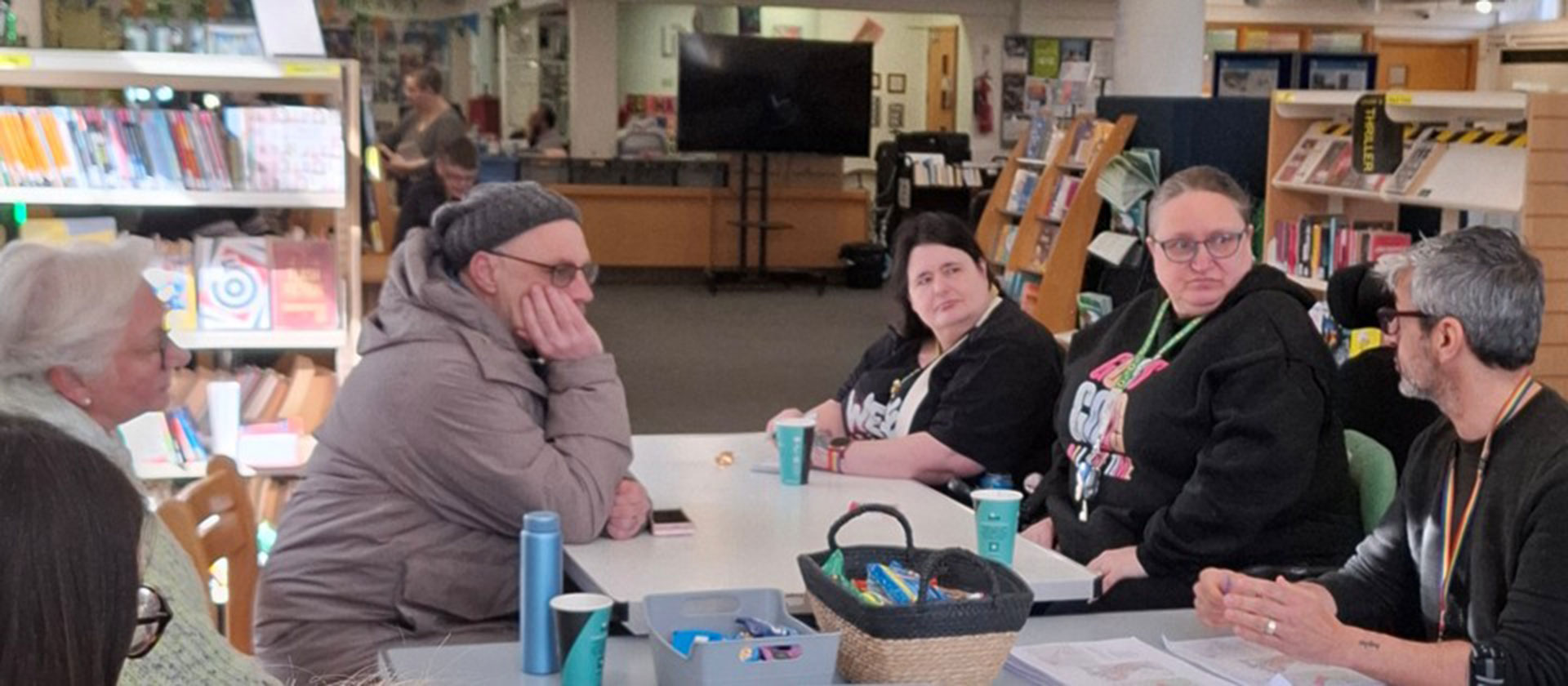
The group brings residents of the Alton Estate together with members of the design team to identify barriers to accessibility and inclusion across the estate. These conversations also help shape the plans for the estate's regeneration, ensuring it reflects the needs of those who live here.
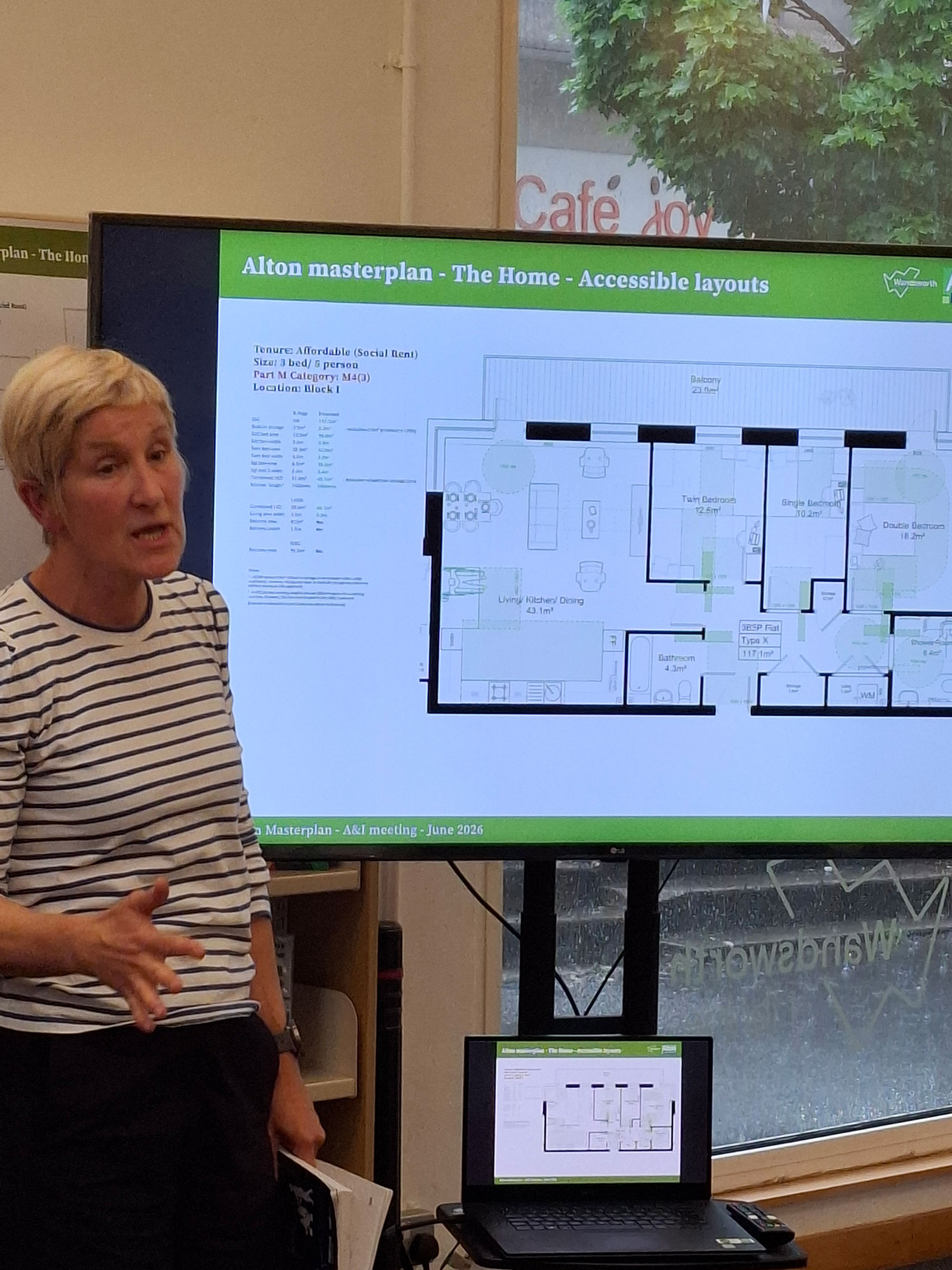
Access & Inclusion Panel, June 2026
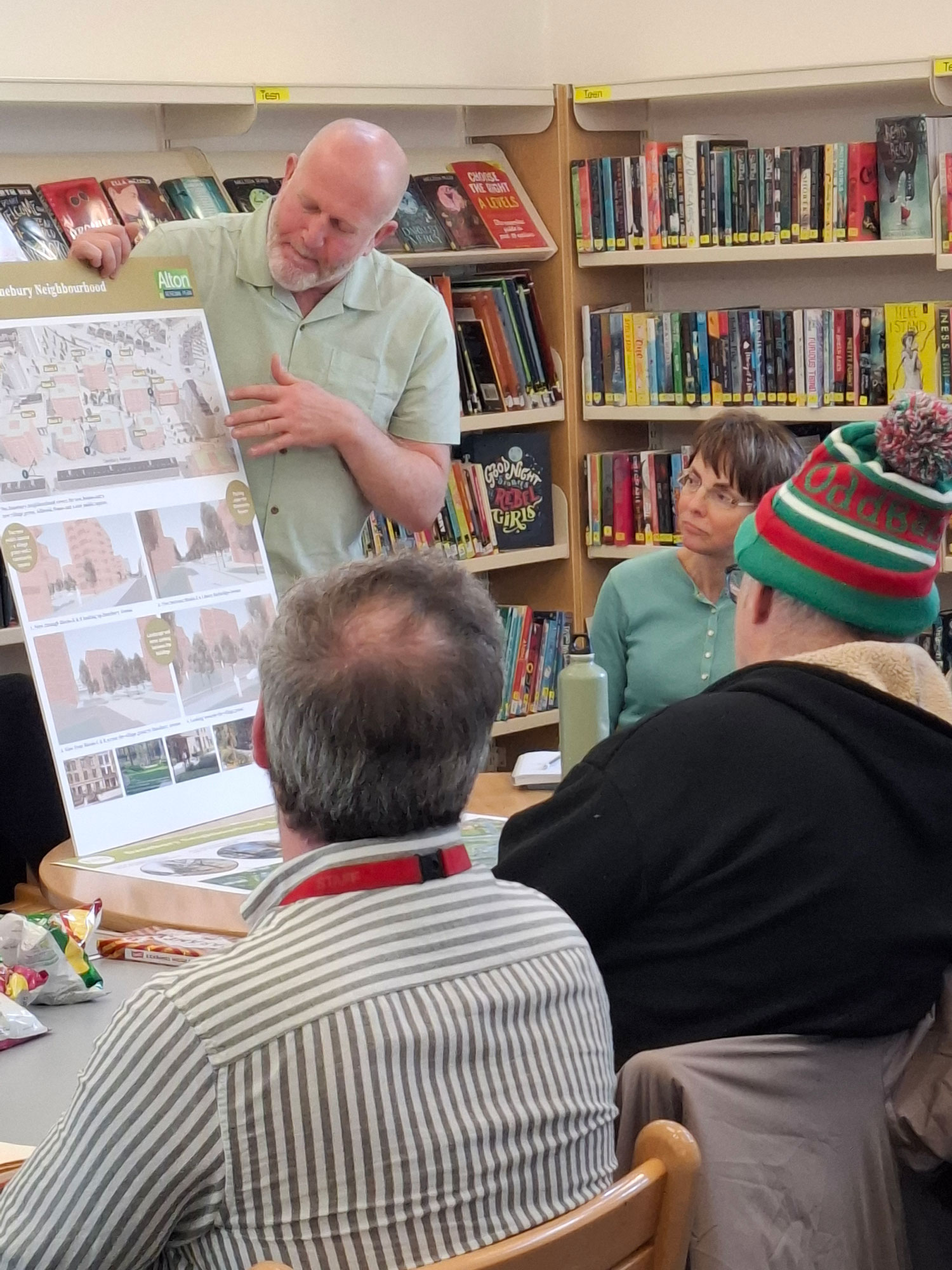
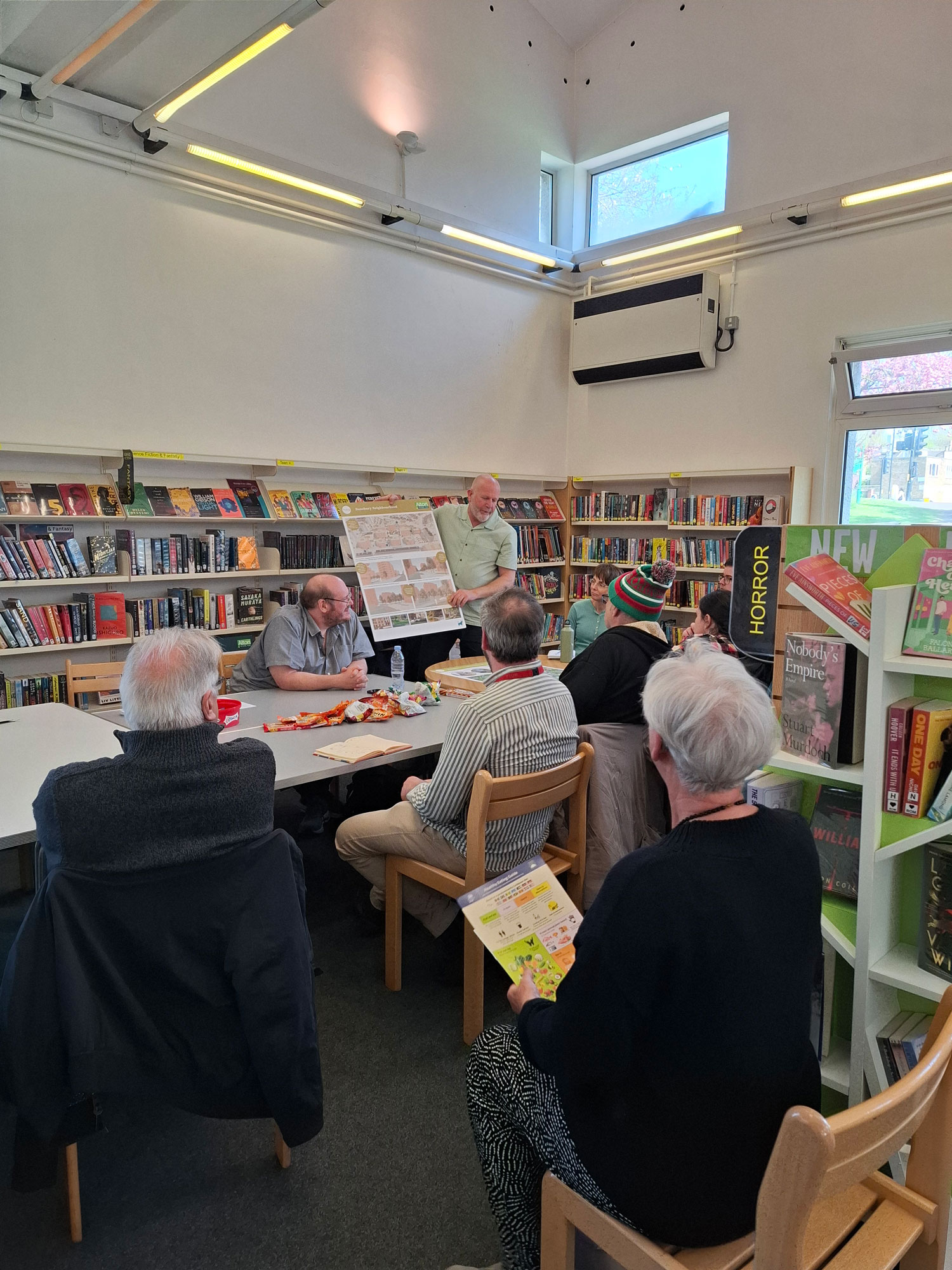
The June meeting of the Access & Inclusion Panel was joined by HTA (the design team guiding the Alton Renewal Plan housing proposals) and Jacquel Runnalls (one of the council's housing occupational therapists). Panel members were led through the essentials of housing design, regulations, policy, viability, and key service needs like bins, cycle storage, and utilities.
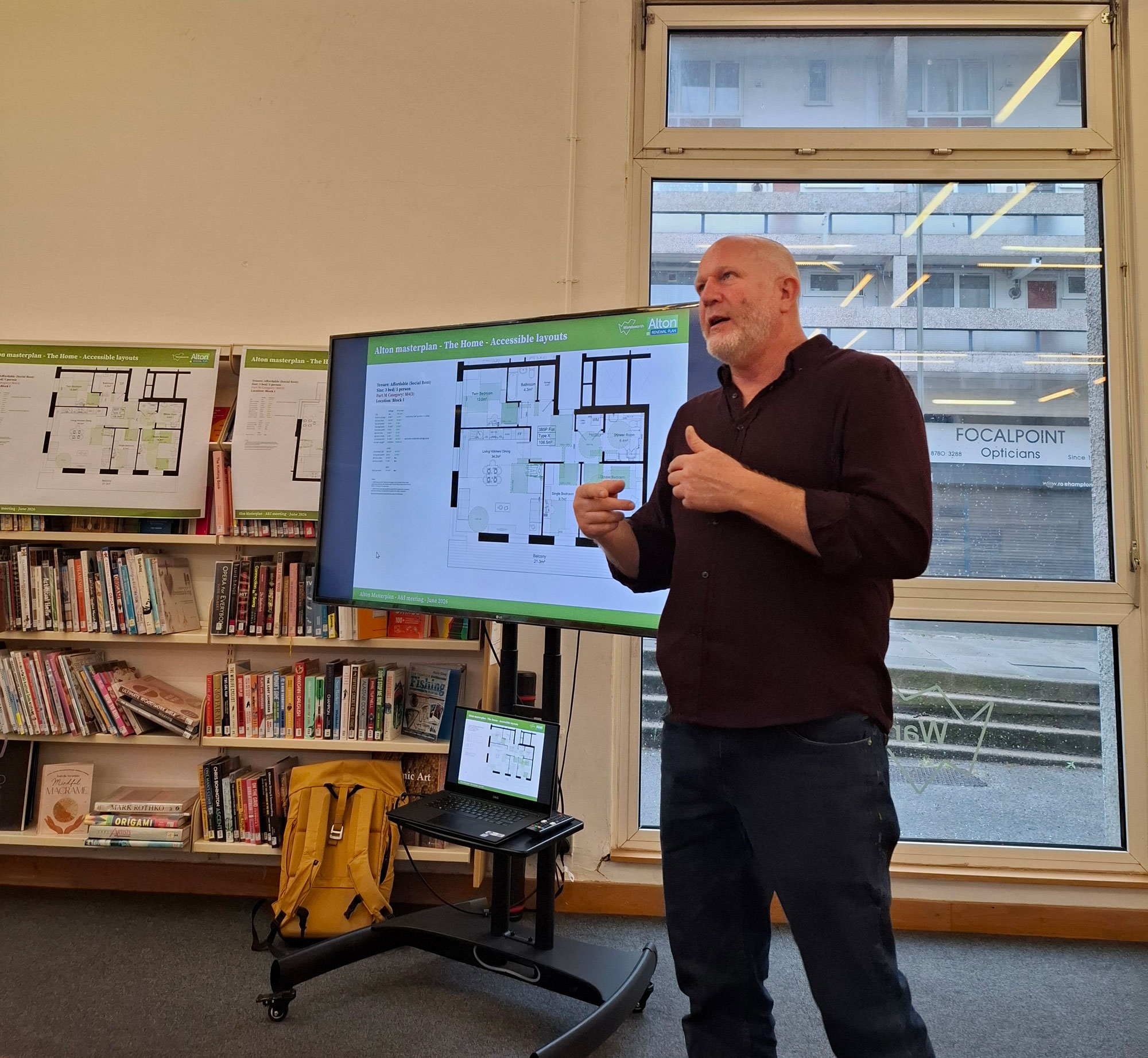
Panel members reflected on what works well and what presents challenges in their current homes, particularly from the perspective of wheelchair users. Many of the properties, built in the 1960s, no longer meet modern accessibility needs. They often lack adequate space, step-free access, and suitable layouts to accommodate contemporary electric wheelchairs and associated mobility equipment.
The group then explored key priorities for new homes designed with wheelchair accessibility in mind. These included step-free, well-lit and secure entrances; accessible and conveniently located bin storage; and layout considerations such as sufficient turning space, level thresholds, and whether open-plan or clearly defined rooms better support ease of movement.
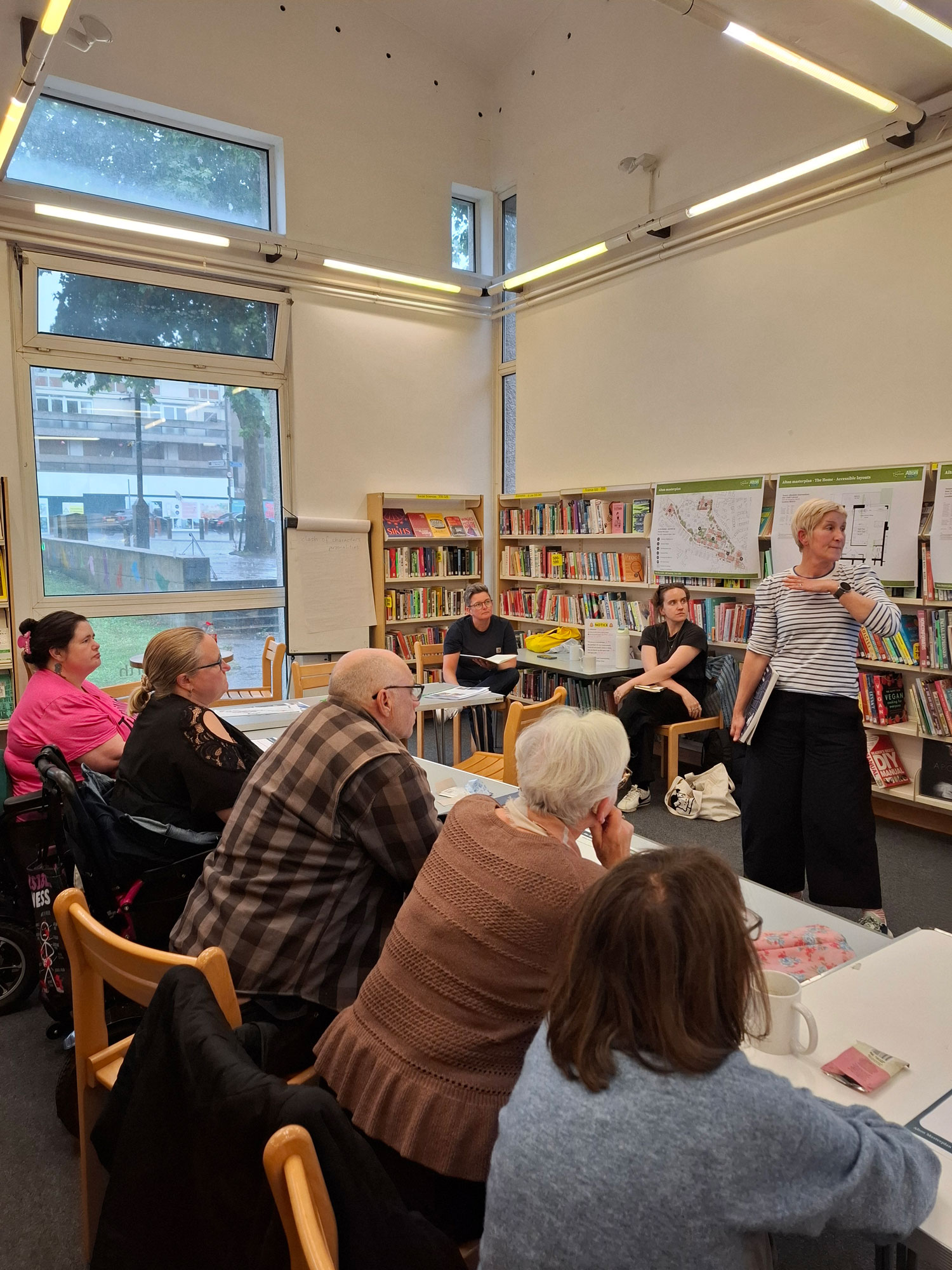
Panel members also highlighted the importance of wide, easy-to-operate doors, accessible storage solutions, and integrated charging points for electric wheelchairs and mobility scooters. Overall, there was a strong emphasis on designing homes that are adaptable, future-proofed and enable residents to live independently with dignity.
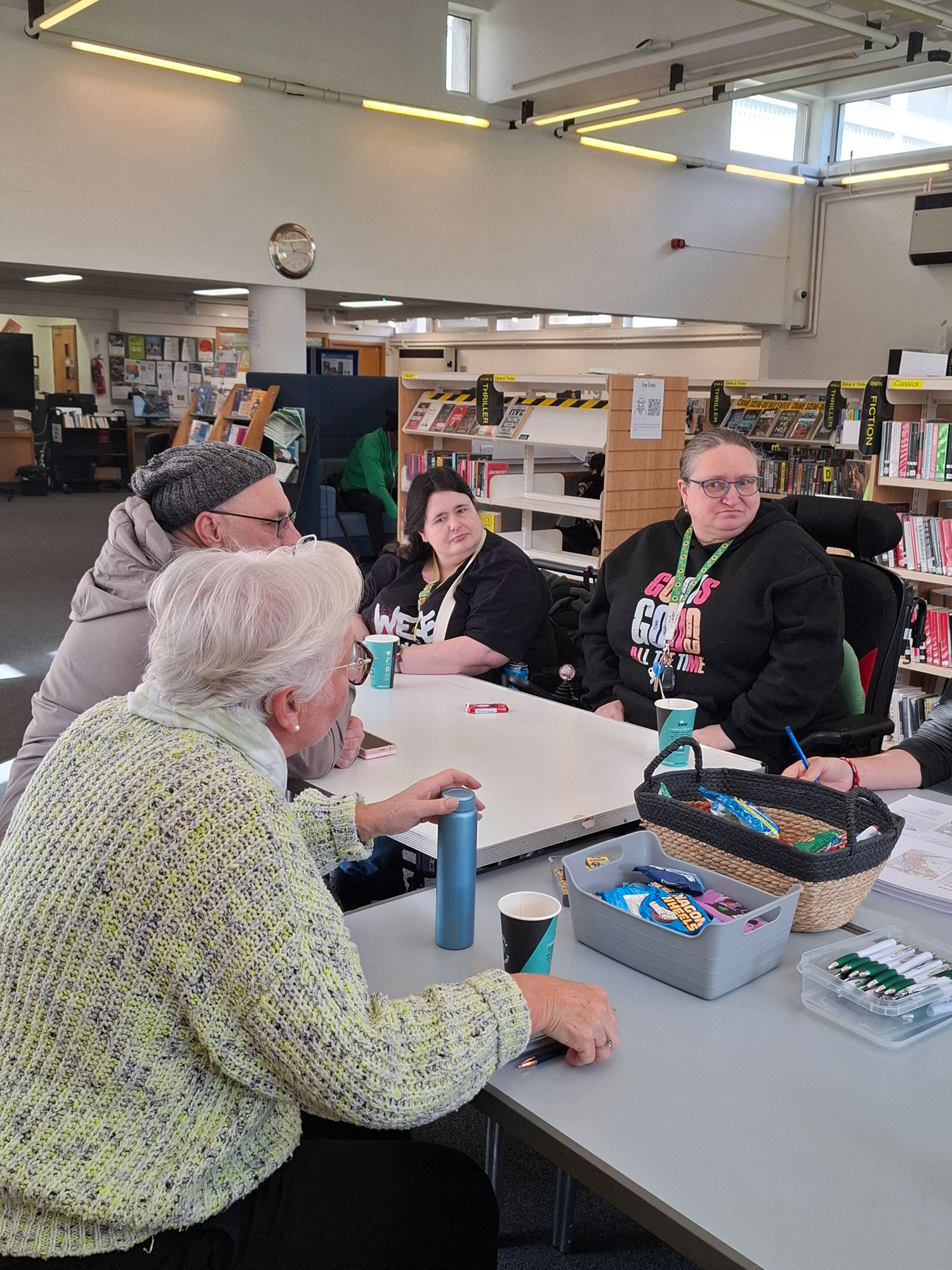
Access & Inclusion Panel, March 2026
The March Access & Inclusion Panel session was hosted by the transport planning team with Cllr Jenny Yates - the Cabinet Member for Transport - in attendance.
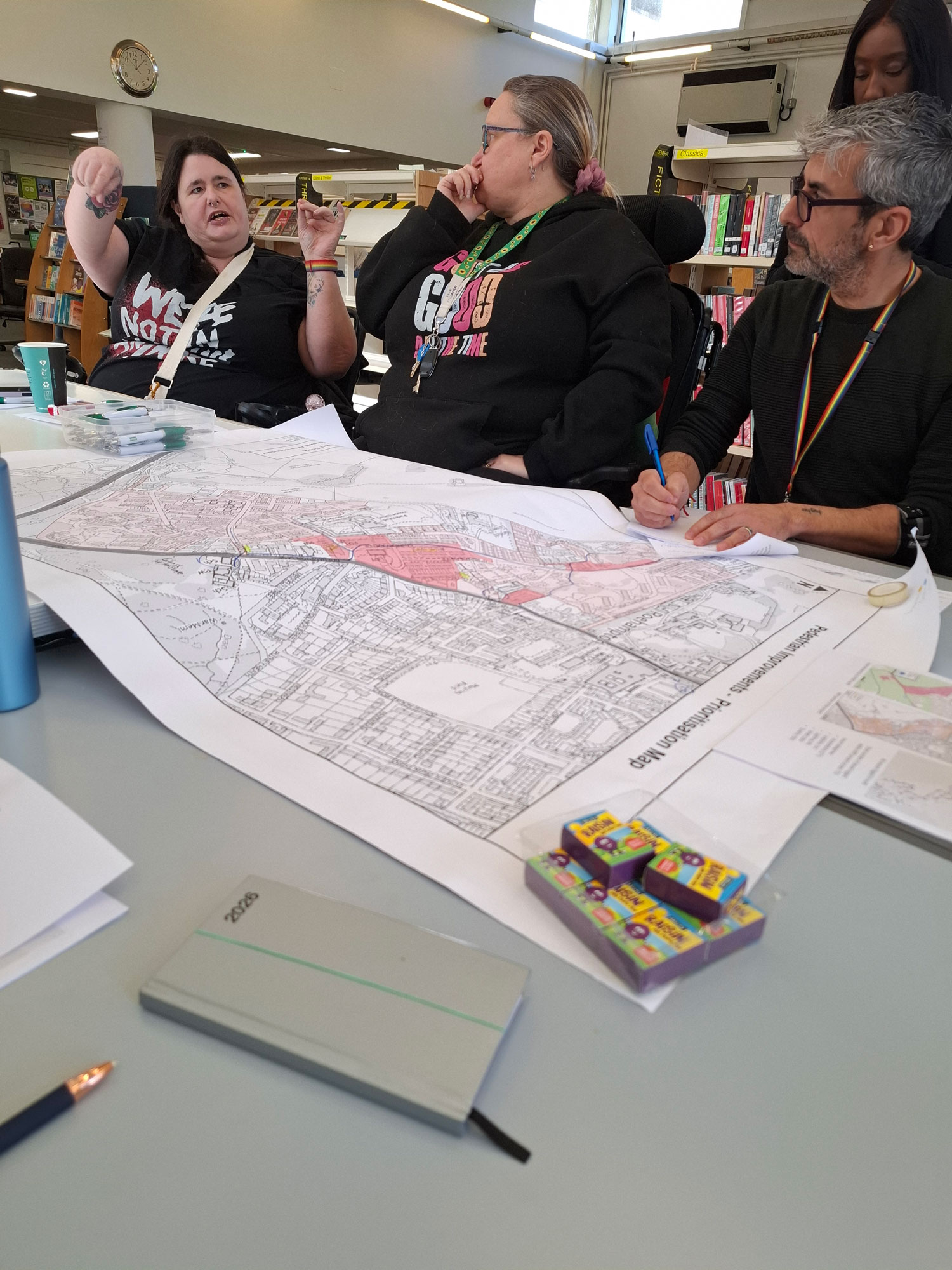
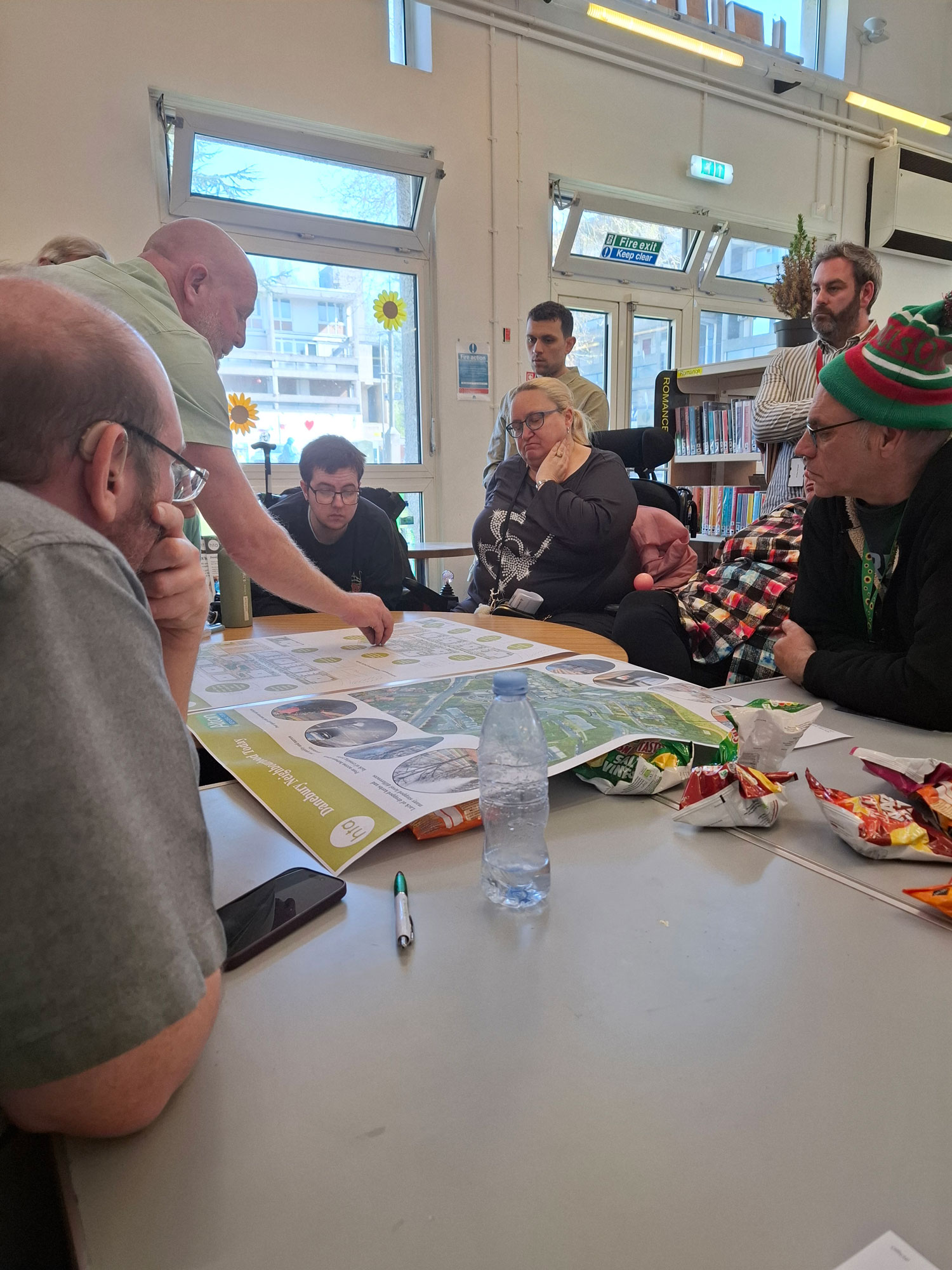
This panel session focussed on how to make pedestrian routes safer and easier.
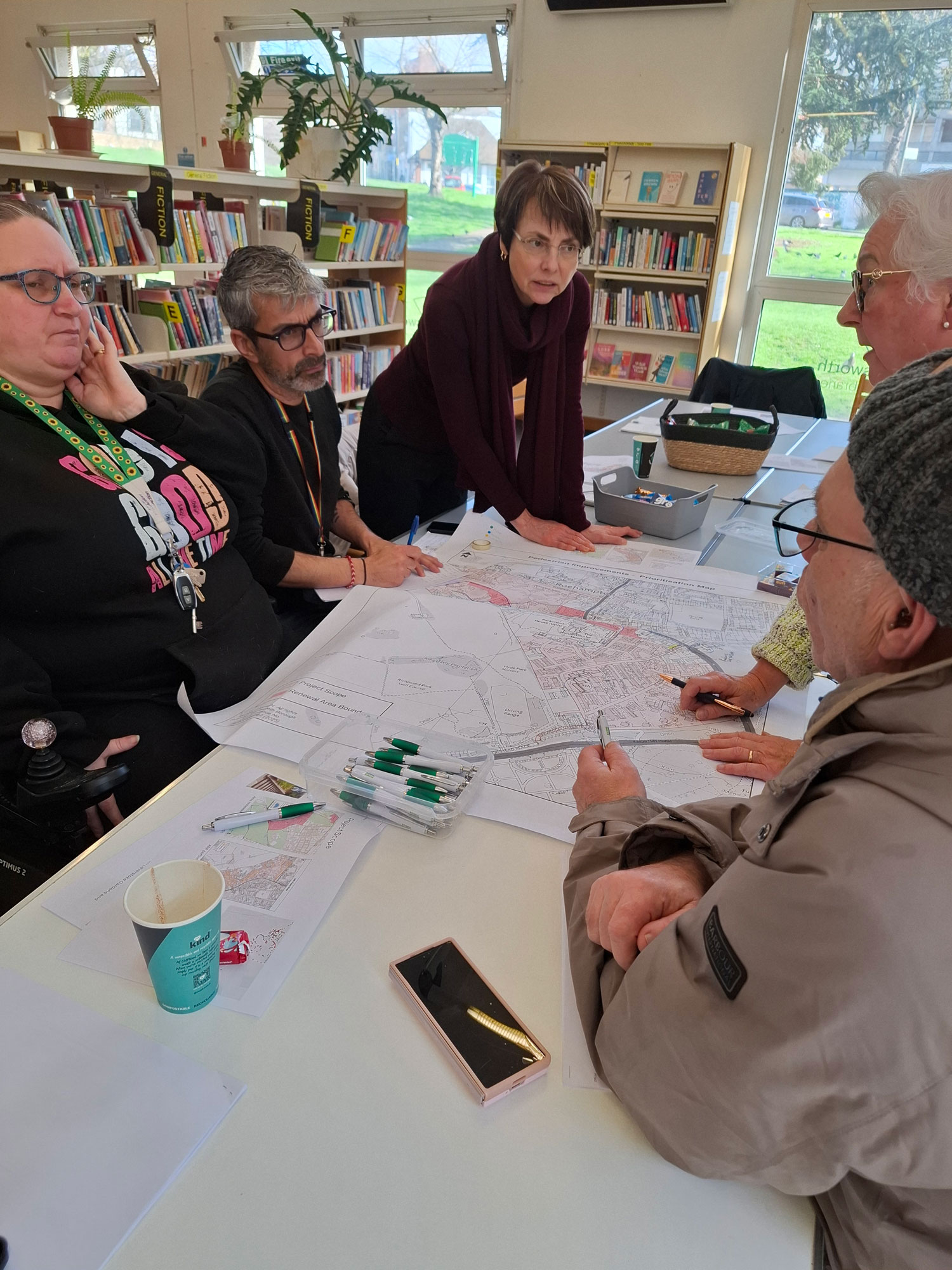
Panel members reviewed plans of the area, mapping out the paths they rely on and highlighting the areas they avoid because of barriers or safety concerns.
Would you be interested in joining the Access & Inclusion Panel?
We are looking to expand the Access & Inclusion Panel so that a wider range of experiences and perspectives are represented. Discussions focus on aspects of daily life and how the regeneration can address challenges residents face. Topics include, housing, landscaping, playgrounds, access routes through the estate, provision of shops, safety on the estate, provision of community spaces and services.
We would love to hear from all residents with ideas about improving access and inclusion for the discussion topics listed above and are looking to increase participation form a wide range of backgrounds, abilities and experiences including: older residents, people with sight and hearing loss, parents and residents who care for children, residents who are neurodivergent or have sensory processing difference and residents facing cultural or language barriers.
If you are interested in contributing to these important discussions and helping shape the future of the estate, please contact Jo Baxter for more information.